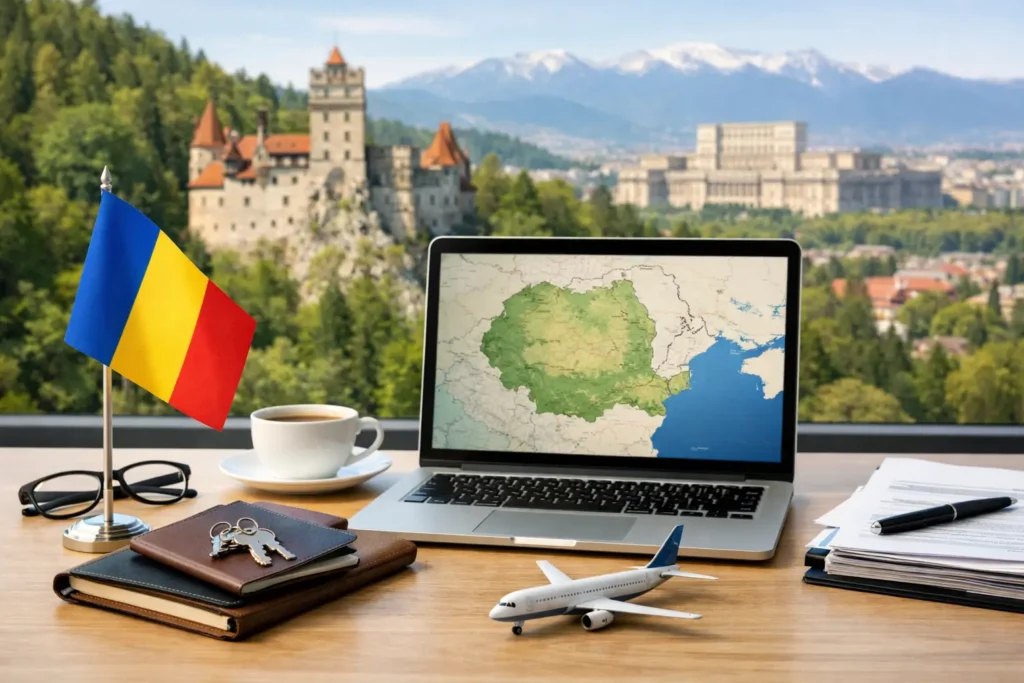
Romania tends to become real all at once – when you start comparing rent in Bucharest to other European capitals, when you notice how strong the internet is, or when a job offer, freelance plan, or family decision turns a vague idea into a deadline. If you’re figuring out how to move to Romania, the fastest way to reduce stress is to treat it as three separate projects: your legal right to stay, your financial setup, and your day-to-day landing plan.
That matters because people often focus on only one part. They secure an apartment but not the correct residence basis, or they get a visa sorted but arrive without understanding neighborhood choices, tax implications, or how much setup costs can stack up in the first month. Romania can be very livable, but the move goes more smoothly when you plan in the right order.
How to move to Romania: start with your legal basis
Before you think about shipping boxes or signing a lease, you need to know what gives you the right to live in Romania. The answer depends heavily on your nationality and your reason for moving.
If you are an EU, EEA, or Swiss citizen, the process is generally lighter. You can enter Romania without a visa, but if you stay beyond the short-term threshold, you will usually need to complete local registration steps and document the basis for your stay, such as employment, self-employment, studies, or sufficient means.
If you are a non-EU national, the process is more document-driven. In most cases, you will need a long-stay visa before arrival if you plan to remain in Romania beyond a short visit. The category matters. There are different tracks for work, business, study, family reunification, and other purposes, and each one comes with its own paperwork, supporting evidence, and follow-up residence permit process after arrival.
This is where many relocation plans slow down. Romania is not impossible to navigate, but it is procedural. Your documents need to match your actual reason for staying. If you plan to work locally, use the work-based route. If you are joining a spouse or close family member, use the family-based route. Trying to improvise later can create delays, especially if your initial entry basis does not align with your long-term plan.
Choose your city before you choose your apartment
A move to Romania is also a move to a specific local reality. Bucharest offers the broadest job market, the largest international business scene, and the most services in English, but it also comes with heavier traffic, more competition for desirable rentals, and a faster pace.
Cluj-Napoca is popular with tech workers, startup-minded professionals, and people who want a smaller city with a strong professional ecosystem. Timișoara appeals to those who want a western-facing business environment and a manageable urban scale. Iași attracts students, academics, and families looking for lower costs than Bucharest in some categories. Brașov often enters the conversation for quality of life, scenery, and a more relaxed atmosphere, although the job market is narrower depending on your field.
The right city depends on what cannot be compromised. If your income is tied to a Romanian employer, the job market may decide for you. If you work remotely, you may prioritize walkability, airport access, schools, or monthly costs. For families, access to international schools, pediatric care, and quieter neighborhoods may matter more than nightlife or central office districts.
Build a realistic first-three-month budget
Romania is often described as affordable, and compared with many Western European countries that can be true. Still, affordability depends on your income source, your city, and your housing expectations.
Your first three months are usually more expensive than your long-term monthly life. You may need a deposit and advance rent, temporary accommodation, translated or legalized documents, residence-related fees, transportation, SIM setup, household basics, and private health coverage depending on your status. Even people moving to save money can be caught off guard by landing costs.
Rent varies widely by city and neighborhood. So does your experience of value. A lower rent outside the center may look attractive until you factor in commute time, taxi dependence, or limited services nearby. If you are new to the country, it is often smarter to take short-term accommodation first and learn the city before locking into a longer lease.
Housing in Romania: practical expectations
Romanian rentals can move quickly, especially in major cities and around the start of the academic year. Listings may not always be as standardized or transparent as newcomers expect. Some landlords are comfortable renting to foreigners and using clear contracts. Others are less prepared for the administrative side of renting to an expat.
Ask early whether the landlord is willing to provide the documents you may need for registration or residence purposes. That detail can matter as much as the apartment itself. A good location and fair rent do not help much if your paperwork cannot be supported.
It is also worth checking what is included in the monthly price. Utilities, building maintenance costs, internet, and seasonal heating can shift the real cost of living more than people expect. Romania has plenty of attractive housing stock, but quality varies. Photos do not always tell the full story, particularly in older buildings.
Work, taxes, and the question people leave too late
If you are moving for employment, make sure the immigration route, employment contract, and tax setup are aligned from the beginning. If you are moving as a freelancer, remote worker, or founder, do not assume your home-country structure will automatically fit Romanian rules.
This is one of the most common weak spots in relocation planning. People understand where they will live, but not where they are tax resident, whether they need local registration, or what kind of social contributions may apply. The answer depends on your nationality, time spent in Romania, income source, employer structure, and whether there is a treaty affecting your situation.
There is no single rule that covers every expat. A corporate transferee, an independent consultant invoicing foreign clients, and a spouse relocating without immediate employment will all face different practical questions. If your move has any complexity, clarity upfront is far cheaper than fixing mistakes later.
Healthcare, banking, and everyday setup
Once you arrive, life gets easier when you prioritize the systems that support daily stability. Healthcare is one of them. Some residents access care through the public system based on employment, contributions, or status. Others rely at first on private clinics and insurance. In larger cities, private healthcare is often the easier starting point for expats because of speed, convenience, and language accessibility.
Banking can be straightforward, but requirements differ by institution and may depend on your residence documents, proof of address, and source of income. If you need a Romanian account for salary, rent, or local billing, start that process soon after arrival. The same goes for a local phone number, since it is often needed for practical tasks and service verification.
Transport habits are another adjustment point. If you are coming from a city where everything runs on one transit app and one card, expect some variation. Bucharest has a broad public transport network and ride-hailing options, while smaller cities may feel easier to navigate but offer fewer alternatives depending on where you live.
How to move to Romania and settle well
The legal move is only half the move. Settling well means learning how Romania actually functions in daily life. Bureaucracy can feel formal, but personal relationships and local context matter a lot. Patience helps. So does keeping printed copies of important documents, even if you think digital should be enough.
Romania can feel very welcoming once you are anchored, but the first phase often requires persistence. You may deal with inconsistent information, language gaps, and processes that depend on the office, city, or case officer. That does not always mean something is wrong. It often means you need to verify, follow up, and stay organized.
Language also changes your experience. In major cities, many younger professionals speak English, especially in business, tech, hospitality, and private services. Still, basic Romanian goes a long way. It improves practical life, helps with administrative situations, and makes social integration easier.
For many expats, the smartest approach is to avoid making every decision permanent in month one. Choose a flexible landing plan, understand your legal path clearly, and give yourself time to test your city, neighborhood, and routines. That is usually the difference between a move that feels chaotic and one that becomes sustainable.
If you are still in the research stage, focus less on romanticizing the move and more on reducing friction. Romania rewards people who arrive prepared, curious, and realistic. Get the paperwork right, choose your city based on your actual life, and leave room to adapt once you are on the ground. That is how a relocation starts to feel less like a leap and more like a plan.