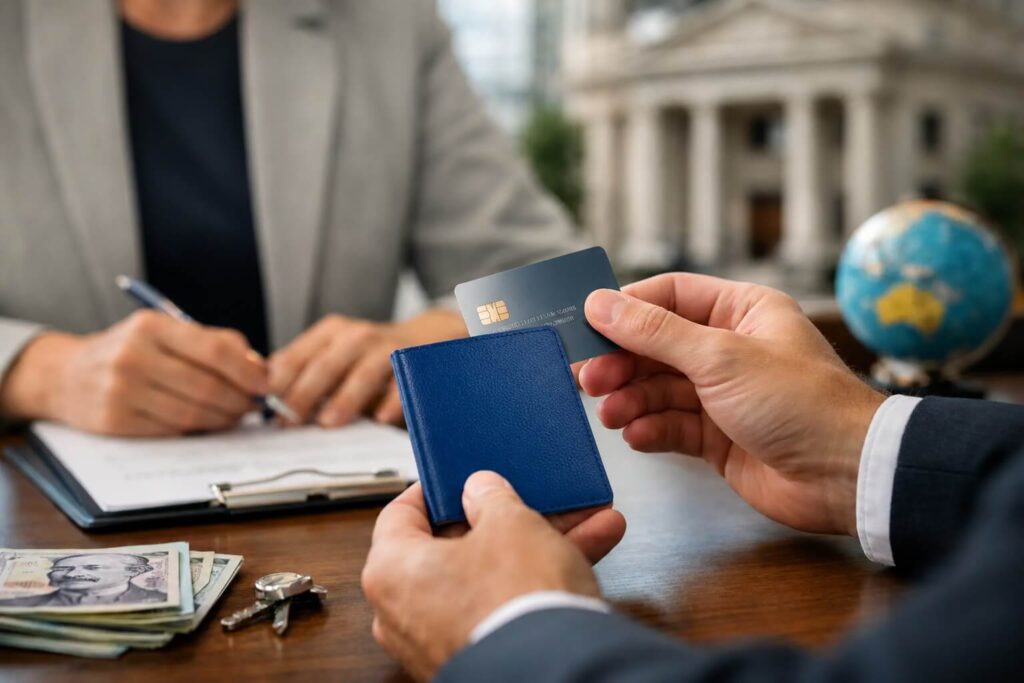
You usually realize you need a Romanian bank account the moment real life starts – when your employer asks for local payment details, your landlord prefers transfers, or a utility provider wants an IBAN that does not trigger extra questions. If you need to open bank account in Romania, the process is often straightforward, but it is not always as uniform as people expect.
Some banks are expat-friendly and used to foreign documents. Others follow stricter internal checks and may ask for more paperwork than the law seems to suggest. That gap between the official process and the branch-level reality is what catches many newcomers off guard.
What to expect when you open a bank account in Romania
Romania has a modern banking system, online banking is widely available, and card payments are common in cities. For everyday life, a local current account can make salary payments, rent, shopping, and mobile banking much easier.
That said, your experience depends on who you are and how settled you already are. An EU citizen with a work contract and local address will usually have a smoother path than a newly arrived non-EU remote worker still waiting on residence documents. Entrepreneurs and freelancers can also face extra verification, especially if the bank wants to understand the source and pattern of incoming funds.
The practical point is simple: you are not just opening an account, you are passing the bank’s identity and compliance checks. If your paperwork tells a clear story, the process tends to move faster.
Who can open a bank account in Romania
In general, residents and non-residents can both open accounts in Romania, but not always under the same conditions. Most banks will happily open an account for foreign nationals, yet they may differ on whether they require a Romanian address, proof of employment, or a residence permit.
If you are relocating for work, studying, joining family, or starting a business, your chances improve once you can show a stable reason for being in the country. If you have only just arrived and have not completed your local registration steps, some banks may still help, but others may ask you to return later.
This is one of those situations where the answer is not purely legal. It depends on the bank, the branch, and sometimes the staff member reviewing your file.
Documents banks commonly ask for
If you want to open a bank account in Romania, prepare more than the bare minimum. Even when a bank’s website lists only one or two items, branches often request supporting documents before approving the account.
A valid passport is the basic starting point. EU nationals may also use a national ID card in some cases. Beyond identity, banks commonly ask for proof of address. That can be a Romanian rental contract, proof of residence registration, a utility bill, or another document showing where you live. Some banks may accept a foreign address for non-resident accounts, but not all branches handle these applications confidently.
Many applicants are also asked for proof of why they are in Romania. That might be an employment contract, a certificate from a university, company incorporation documents, or a residence card. If you are opening the account for salary payments, a letter from your employer can help even when it is not formally required.
Banks may also ask for a local phone number and email address. This is partly practical and partly tied to account security, mobile banking setup, and transaction verification.
If your documents are not in Romanian, the branch may or may not ask for translations. This is another area where internal practice varies. For major documents such as corporate paperwork or residence-related records, having a translated copy ready can save time.
Current account, savings account, or business account?
Most expats start with a personal current account. This is the standard option for receiving salary, making transfers, paying bills, and using a debit card. If you are employed in Romania, this is usually the account type you need first.
A savings account is separate and not always necessary on day one. It can be useful later, but it will not replace a working current account for daily transactions.
Business accounts are a different category. If you are opening one as a founder, freelancer using a local company, or legal representative, expect more paperwork. Banks will want to verify the company structure, the people authorized to operate the account, and the nature of the business. That process can take longer than a personal account, even if your company is already registered.
Can you open a Romanian bank account online?
Sometimes yes, but not always fully.
Some banks in Romania offer digital onboarding for certain categories of customers. You may be able to start the application online, upload ID documents, and schedule identity verification through an app. In practice, foreign applicants often still end up visiting a branch, especially if their documents are issued abroad or if their residency status needs manual review.
This matters if you are trying to get everything done before arrival. It is worth checking digital options, but do not build your entire move around the assumption that online opening will work without an in-person visit.
Common reasons applications get delayed
The biggest delays usually come from mismatched paperwork, unclear residency status, or simple inconsistencies between documents. If your passport shows one spelling, your lease another, and your employment document a third format of your name, the bank may stop the process until everything is clarified.
Address proof is another frequent issue. A short-term booking or informal housing arrangement may not be enough for some banks. If you are staying temporarily with friends or in employer-provided housing, ask in advance what kind of address evidence the branch will accept.
International transfers can also trigger additional questions after the account is opened. This is not unique to Romania. If the bank sees large or unusual incoming amounts early on, it may request documents showing the purpose of the payment. For new arrivals, this can feel personal, but it is usually a standard compliance step.
How to make the process smoother
A little preparation can make a real difference. Bring your passport, residence-related documents, address proof, and a second supporting document that explains your reason for being in Romania. If you have an employment contract, bring it. If you run a company, bring the company papers. If you are studying, bring enrollment confirmation.
It also helps to choose a branch in a larger city or business district, where staff are more likely to deal regularly with foreign nationals. English-speaking service is not guaranteed in every location, even at well-known banks. In Bucharest, Cluj-Napoca, Timisoara, Iasi, and other major cities, the odds are better.
If one branch says no, that does not always mean the bank says no. Another branch may interpret the same case more comfortably, especially if they handle more international clients. That may feel inefficient, but it is a normal part of the experience for some expats.
Fees, cards, and everyday banking details
Before you sign anything, ask about monthly account fees, card issuance fees, ATM withdrawal charges, and the cost of transfers in foreign currency. Romanian banks often offer account packages, and the cheapest option is not always the most useful if you need international payments, multiple currencies, or strong mobile banking features.
If your income arrives in euros or another foreign currency, ask whether you can hold that currency in the account or whether conversion happens automatically. For some people, especially international professionals and founders, this detail matters more than the headline monthly fee.
Also ask how long it takes to receive the physical debit card, whether a temporary virtual card is available, and what identification is needed later if you return to update your account details.
Open bank account in Romania as a newcomer – the realistic view
For most expats, opening a bank account in Romania is manageable within a few days once the right documents are in place. For others, especially newly arrived non-residents or business owners with more complex paperwork, it can take longer and involve a second visit.
The best approach is not to expect a perfect one-size-fits-all process. Expect checks, expect a few bank-specific rules, and expect that your paperwork matters as much as your eligibility. That mindset saves frustration.
At Expat-Center Romania, we see this pattern often: the people who have the easiest experience are not necessarily the ones with the simplest case, but the ones who show up prepared. If you treat the bank meeting as part of your wider relocation setup rather than a quick errand, you are far more likely to walk out with a working account and fewer surprises.
A Romanian bank account will not solve every part of settling in, but it does remove one of the most persistent frictions of daily life – and once that piece is in place, many other practical steps become easier.