If you are planning more than a short stay, understanding Romanian residence permit requirements early can save you weeks of stress. The biggest problems usually do not come from one major legal obstacle. They come from small mismatches – such as an expired supporting document, a housing agreement that does not match your address, or applying too late after arrival.
For most non-EU nationals, the residence permit is the document that turns a legal entry into a legal stay for work, study, family reunification, business activity, or other approved purposes. The exact requirements depend on why you are in Romania, but the logic is consistent: the authorities want proof of identity, lawful entry, a valid reason to stay, a place to live, and compliance with the specific permit category.
Who needs a Romanian residence permit?
In general, non-EU, non-EEA, and non-Swiss nationals who intend to remain in Romania beyond the period allowed by their visa or visa-free entry rule will usually need a residence permit. If you enter Romania for long-term purposes, the permit is typically the next step after receiving a long-stay visa, not a substitute for it.
EU, EEA, and Swiss citizens are in a different position. They are not usually applying for the same type of residence permit as third-country nationals, although they may still need to register their residence depending on the length and purpose of stay. This distinction matters because many people read general advice online and assume the same process applies to everyone.
Romanian residence permit requirements by category
The phrase Romanian residence permit requirements sounds simple, but the actual file depends on your legal basis for staying in the country. A work-based application will not be judged the same way as a family reunification or study-based application.
Employment
If you are coming to Romania for work, your application usually builds on an employment relationship already approved through the appropriate immigration and labor process. In practice, the residence permit file often includes your passport, proof of legal entry, a work-related basis for stay, proof of accommodation, medical insurance or equivalent coverage where applicable, and evidence that the employer-side steps were completed correctly.
This is where timing matters. Many foreign employees assume the job offer alone is enough. It usually is not. The authorities want to see that the immigration route attached to that job has been properly established before the residence permit is issued.
Family reunification
Family-based residence usually requires proof of the family relationship, along with documents showing that the sponsor in Romania has legal status and can support the reunification request. Marriage certificates and birth certificates often need to be officially recognized, translated, and prepared in the form accepted by Romanian authorities.
This category can look straightforward on paper, but it often becomes document-heavy in real life. If names, dates, or civil status records do not match perfectly across countries, expect extra scrutiny.
Studies
Students generally need proof of acceptance by a Romanian educational institution, evidence tied to accommodation, identity documents, and the supporting documents connected to their long-stay purpose. The permit remains linked to the educational path, so interruptions in enrollment can affect status.
For students, the main issue is not only getting the first permit. It is making sure later renewals line up with actual academic continuity.
Business, commercial, or other specific purposes
Entrepreneurs, company representatives, researchers, religious personnel, and other special categories may qualify under tailored rules. These applications usually require a stronger category-specific file because the authorities need to see that the stated activity is real, lawful, and supported by the right approvals.
If your situation does not fit the classic employee or spouse route, assume the process may be more technical and less forgiving of vague paperwork.
Core documents commonly required
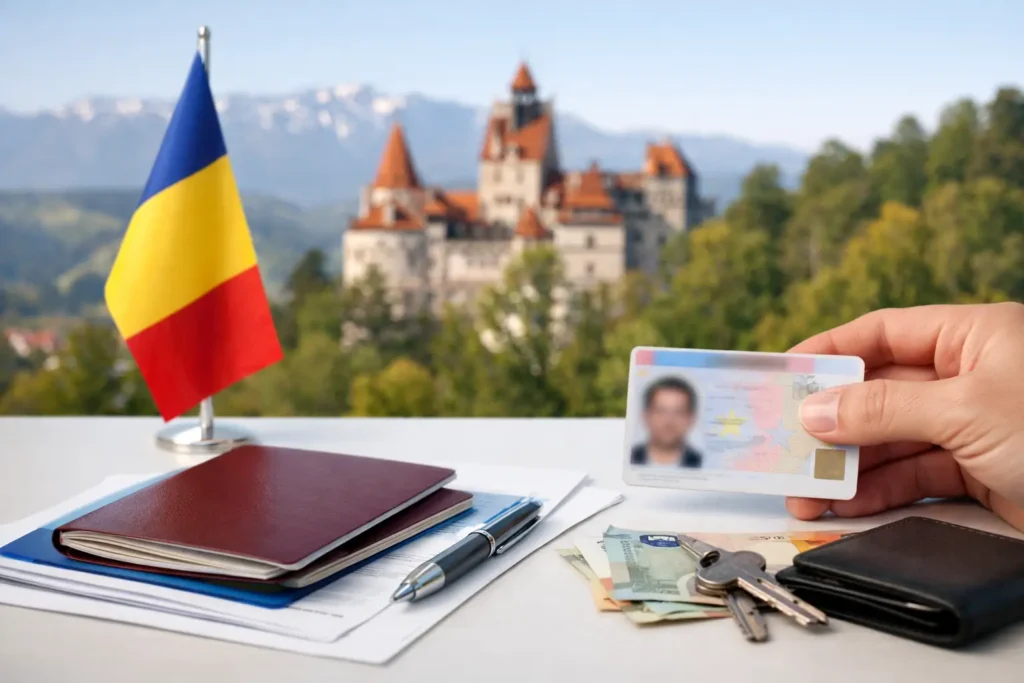
Although requirements vary by category, most applicants should expect to prepare the same basic foundation. That usually includes a valid passport, the visa or entry basis that allows the stay, the application form, passport photos if requested under current filing practice, proof of accommodation in Romania, and category-specific supporting documents.
You may also need civil status documents, proof tied to your reason for stay, and evidence that administrative fees have been paid. Some applicants are asked for medical or insurance-related documentation depending on their status and the current procedural rules.
Two practical points matter here. First, documents issued outside Romania often need authorized translation and, depending on the country of origin, legalization or apostille treatment. Second, Romanian immigration offices care about consistency. Your name, address, employer details, and dates should match across every document in the file.
Where and when to apply
Applications are generally handled through the immigration authorities responsible for your place of residence in Romania. In most cases, you should not wait until the last moment. A late filing can create avoidable risk, even if your case itself is valid.
The right filing window depends on your status and permit type, but the safe approach is to prepare your file well before your current right to stay expires. That means checking your passport validity, accommodation paperwork, and category-specific documents in advance rather than assuming you can assemble everything in a few days.
For newcomers, this is one of the easiest mistakes to make. Romania’s bureaucracy is manageable, but it is document-driven. If one paper takes longer than expected, the whole timeline can shift.
Proof of accommodation is more important than many expect
Among all Romanian residence permit requirements, accommodation proof causes a surprising number of delays. Authorities typically want a clear, legally usable address in Romania, supported by the right documents. Depending on your situation, that might mean a lease, an ownership document from your host, or other accepted housing evidence.
What matters is not only having a place to stay, but showing it in a format that fits the application. Informal arrangements can be harder to prove. If you are staying with family, friends, or an employer, check early what documentation is accepted in practice.
Renewals are not automatic
A common misunderstanding is that once you receive your first permit, future renewals become routine. They can be simpler, but they are not automatic. You still need to show that the basis for your stay continues.
If you are employed, the employment relationship must still support your legal residence. If you are in Romania for family reasons, the underlying family-based status must remain valid. If you are studying, your academic status still matters. Changes in address, passport, civil status, or activity should not be treated as minor details.
This is especially relevant for people building a longer-term life in Romania. Renewal planning should start before the current card is close to expiration, not after.
Common reasons applications get delayed or questioned
Most rejected or delayed files are not dramatic cases. They are ordinary cases with avoidable weaknesses. The most common issues include missing translations, incomplete accommodation documents, inconsistencies between the visa purpose and the permit purpose, expired passports, and applications filed too close to the deadline.
There is also the issue of assumption. Applicants sometimes rely on advice from a friend whose case looked similar but was legally different. A spouse of a Romanian citizen, a non-EU employee of a local company, and a remote worker are not interchangeable immigration profiles, even if all three are moving into the same apartment building in Bucharest.
What to check before you file
Before submitting, review your case as if you were the official reading it for the first time. Can your file clearly answer five questions: who you are, why you are in Romania, whether your entry and stay are legal, where you live, and whether your supporting documents match that story?
If the answer is yes, your application is already in better shape than many first-time filings. If the answer is maybe, pause and fix the weak points first. That extra week of preparation is often worth more than rushing to submit an incomplete file.
For expats managing a relocation, the practical challenge is rarely just one permit. It is coordinating housing, family documents, employer paperwork, and timing across borders. That is why a calm, organized approach matters more than trying to memorize every procedural detail at once.
Romania can be very workable once your paperwork is aligned. Treat the residence permit process as part legal file, part logistics exercise, and you will give yourself a much smoother start to life here.